
When Both Teams Left the Pitch
Spain is one of the newest additions to the global Sikh diaspora. 26,000 Sikhs now call it home, and in February 2023, an entire youth football match stopped so a 15 year old and his patka.

Spain play at the 2026 World Cup, and I’ve been writing a piece about Sikh history for every country in the tournament. For Spain, I found it on a football pitch in the Basque Country on 4 February 2023, when a referee stopped a youth match and told a young teenage Sikh boy to remove his head covering.
The match was between Arratia C and Padura de Arrigorriaga. Early in the second half, the referee walked over to the 15 year old playing for Arratia C and told him to remove his patka.
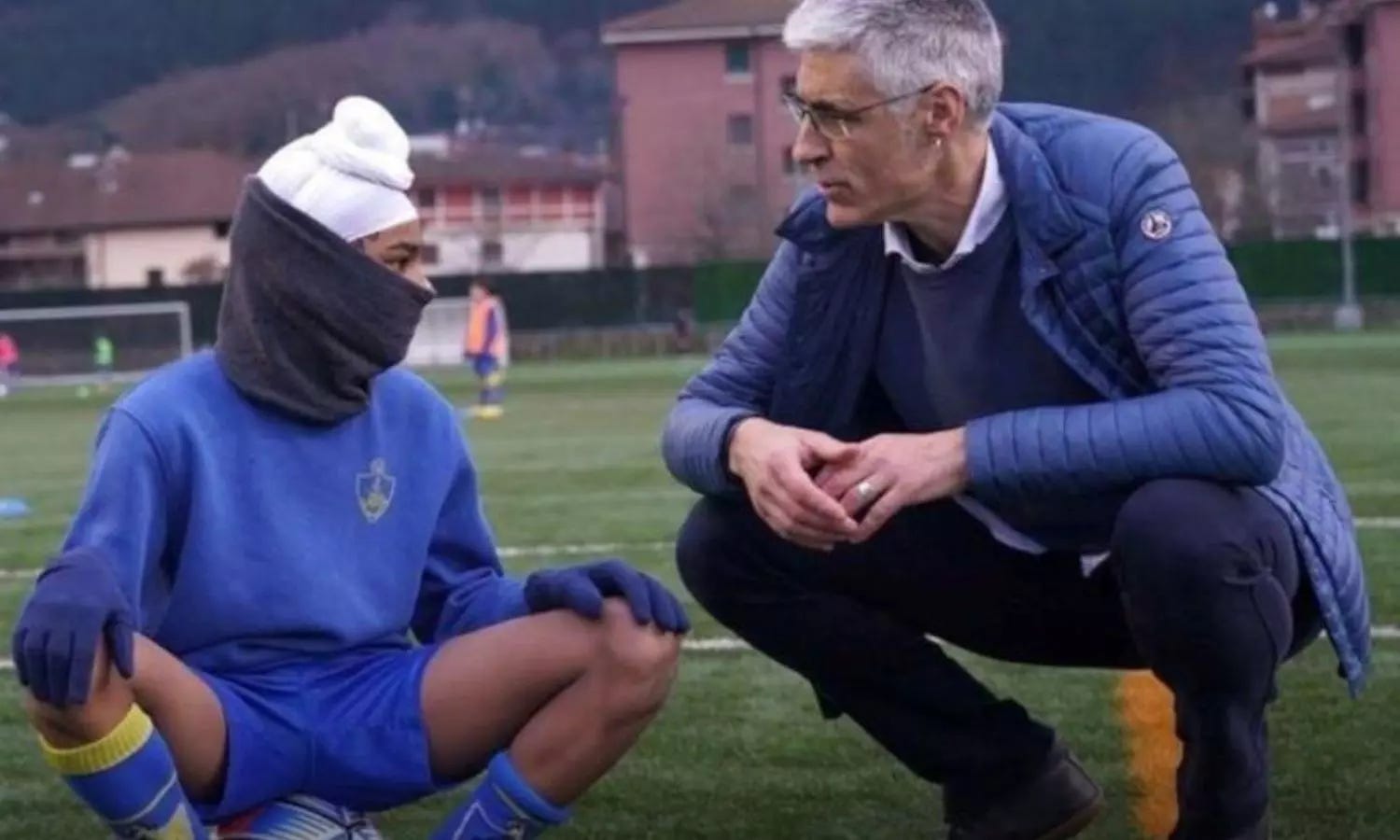
The referee considered it a hat which are prohibited under the regulations.
Gurpreet Singh later described the experience as humiliating but what happened next is why I thought it was important to start here.
Both teams, not just Gurpreet’s own team, walked off the pitch in protest and refused to continue until he was allowed to play. This is something I could never have imagined happening to me growing up in England.
As you can imagine, he was allowed to play.
FIFA has permitted turbans and patkas in competition football since 2014 and none of the referees who had overseen Gurpreet Singh’s previous matches had ever raised any objection.
How Sikhs Got to Spain
Spain joined the European Union on 1 January 1986. That date matters because it transformed the country, within a few years, from a labour-exporting nation, as it had been through the 1960s and 1970s when Spanish workers went north to France and West Germany, into a labour-importing one.
The construction boom of the late 1980s and early 1990s created demand for workers that Spain’s own population couldn’t fill, and the accompanying liberalisation of immigration policy opened the door.
Sikh migration to Spain largely took place in 1990s. The forces pushing it from the Punjab side were familiar ones: agricultural stagnation following the Green Revolution, reduced opportunities in the Indian Army’s traditional Punjabi recruitment pipeline, and, for many families, the political and economic disruption that had accumulated through the 1980s.
Demographers Nachatter Singh Garha and Andreu Domingo, writing in the journal Diaspora Studies in 2017, described the Sikh migration to Spain as characterised by what they called “hypermobility”: a pattern in which migrants do not move directly from Punjab to Spain but follow longer and more complex itineraries, often passing through Italy or the United Kingdom first before arriving in Spain.
Their research was conducted at the Universitat Autònoma de Barcelona, which has produced some of the most substantial academic work on the Sikh community in Spain, and their 2017 paper described Spain as a recent but significant addition to the global Sikh diaspora space.
In a follow-up paper published in 2019, they noted that Spain had 21,000 Sikh residents as of 2016, accounting for roughly 1% of the global Sikh diaspora but approximately 50% of all Indian immigrants in the country.
The work available to Punjabi migrants in Spain in those early years was concentrated in agriculture, in construction, in food processing including slaughterhouses in Catalonia and in the restaurant trade.
The First Gurdwara
In 1992, the Sikh community in Barcelona opened a gurdwara at number 97, Carrer Hospital, a street in the old city whose name commemorates the medieval hospital of the Santa Creu that once stood there. This was, reportedly, the first gurdwara in Spain.
The community grew through the 1990s and into the 2000s, concentrated along Spain’s Mediterranean coast, with Barcelona as the main hub and significant populations in Valencia, Alicante, Madrid and Bilbao.
By 2016, the 21,000 figure that Garha and Domingo recorded reflected a community that had put down real roots over two decades and more. More recent estimates put the number at around 26,000, with approximately 13,000 in Catalonia alone and at least 12 gurdwaras across Spain, with the majority in the northeast.
What’s interesting about the hypermobility that Garha and Domingo describe is that it didn’t only operate on the journey into Spain: the community also moved internally once they arrived, spreading out from initial settlement points to follow work, to be near family or community networks, and to establish new gurdwaras in towns that didn’t yet have them.
What the Community Built
The Sikhs of Catalonia’s contribution to public life was recognised when they won the Martí Gasull i Roig Award in the popular vote category. The award, given by Plataforma per la Llengua, honours people and organisations that defend and promote the Catalan language. A Punjabi Sikh community winning a Catalan language award sounds surprising at first, until you realise how deeply the community has rooted itself in Catalan civic life.
That was also visible after the Las Ramblas attack on 17 August 2017, when a van was driven into crowds in Barcelona, killing 13 people and injuring more than 130. Within hours, local gurdwaras opened their doors.
Both Teams Left the Pitch
Back to Gurpreet Singh and the football pitch in the Basque Country.
When both teams walked off on 4 February 2023, they were doing so in a Spain where Sikhs have been building gurdwaras since 1992, where the Sikh community has won an award for defending Catalan and where the gurdwaras opened for the victims of the worst terrorist attack in Barcelona’s recent memory.
Gurpreet Singh was 15 years old in February 2023, which means he was born into a Spain that already had a Sikh community, where being Punjabi and Sikh is not a new or unfamiliar thing but has a roughly 30 year history behind it, where people will walk off a football pitch with you when a referee gets it wrong.
He was allowed to play.