
The “Debauched Maharaja”
How music and performance were turned into evidence of political failure

For much of the 19th and early 20th centuries, British writing about Punjab repeated a familiar claim.
Sikh rulers, and particularly Maharaja Ranjit Singh, were indulgent, distracted by pleasure and ultimately incapable of sustained political discipline.
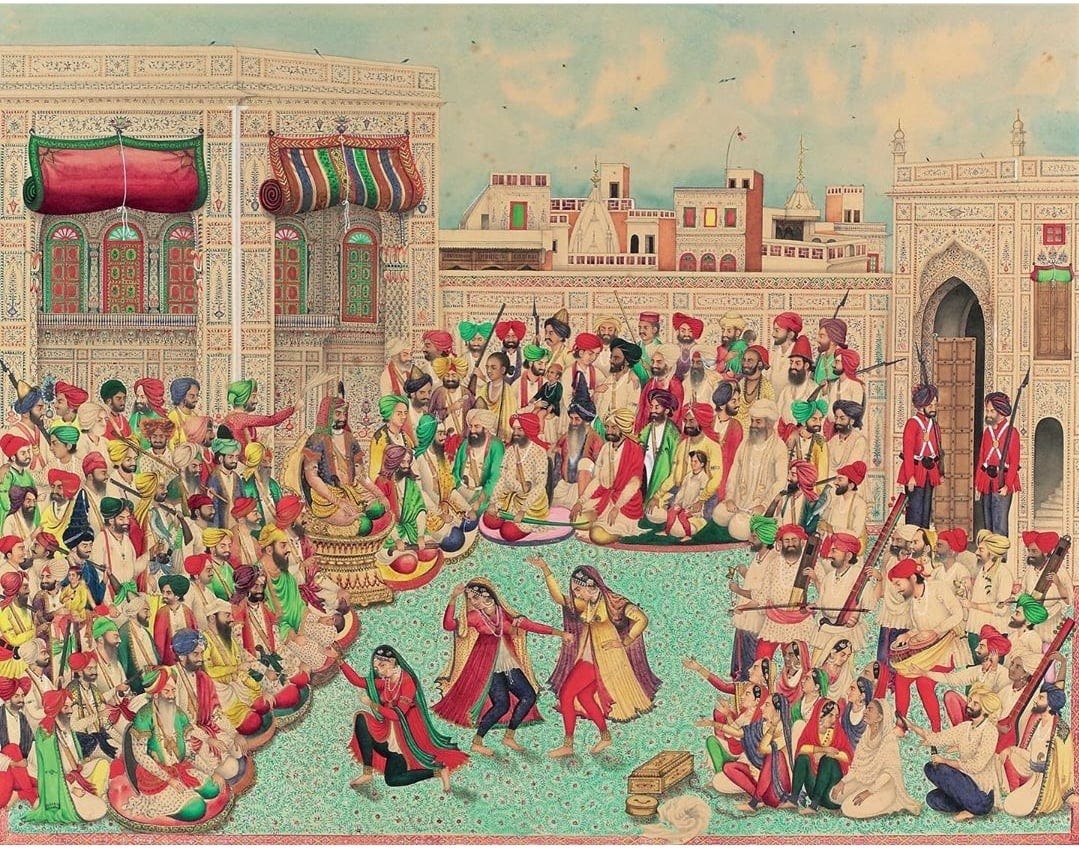
Their courts, filled with musicians, performers and courtesans, were presented as evidence of moral weakness. In other words, the cultural excess led directly to political failure.
This framing has proved remarkably durable. It still shapes how the Sikh Empire is often discussed in popular histories, travel writing and even some academic work today.
Yet, as Radha Kapuria’s research into music and performance in colonial Punjab makes clear, this story rests on a fundamental misunderstanding.
Courtly culture was not a distraction from governance at all. In fact, it was one of the ways in which power was exercised.
Political life in Punjab was highly ceremonial. Diplomacy was not conducted just through paperwork and treaties. It unfolded in public, through ritual, hospitality and performance. As a result, music marked important encounters. Courtesans and singers were part of diplomatic gatherings and their presence signalled stability and refinement.
Persian and Punjabi sources from the early 19th century describe this world in detail. Performances were integrated into court procedure, framing negotations or accompanying political decisions. This was not unique to Punjab. Across South Asia, rulers used culture as a language of power.
British observers, however, struggled to interpret what they were seeing. The British, trained in different political and moral traditions, read the performance through the lens of leisure and excess. Music was seen solely as entertainment and courtesans were deemed moral problems.
The political meaning of these practices was completely ignored.
By the mid-19th century, this misreading hardened into a narrative. Colonial memoirs, reports and later histories increasingly portrayed Ranjit Singh and other rulers as habitual drinkers, obsessed with pleasure and indifferent to administration. These descriptions were repeated so often that they began to feel self evident.
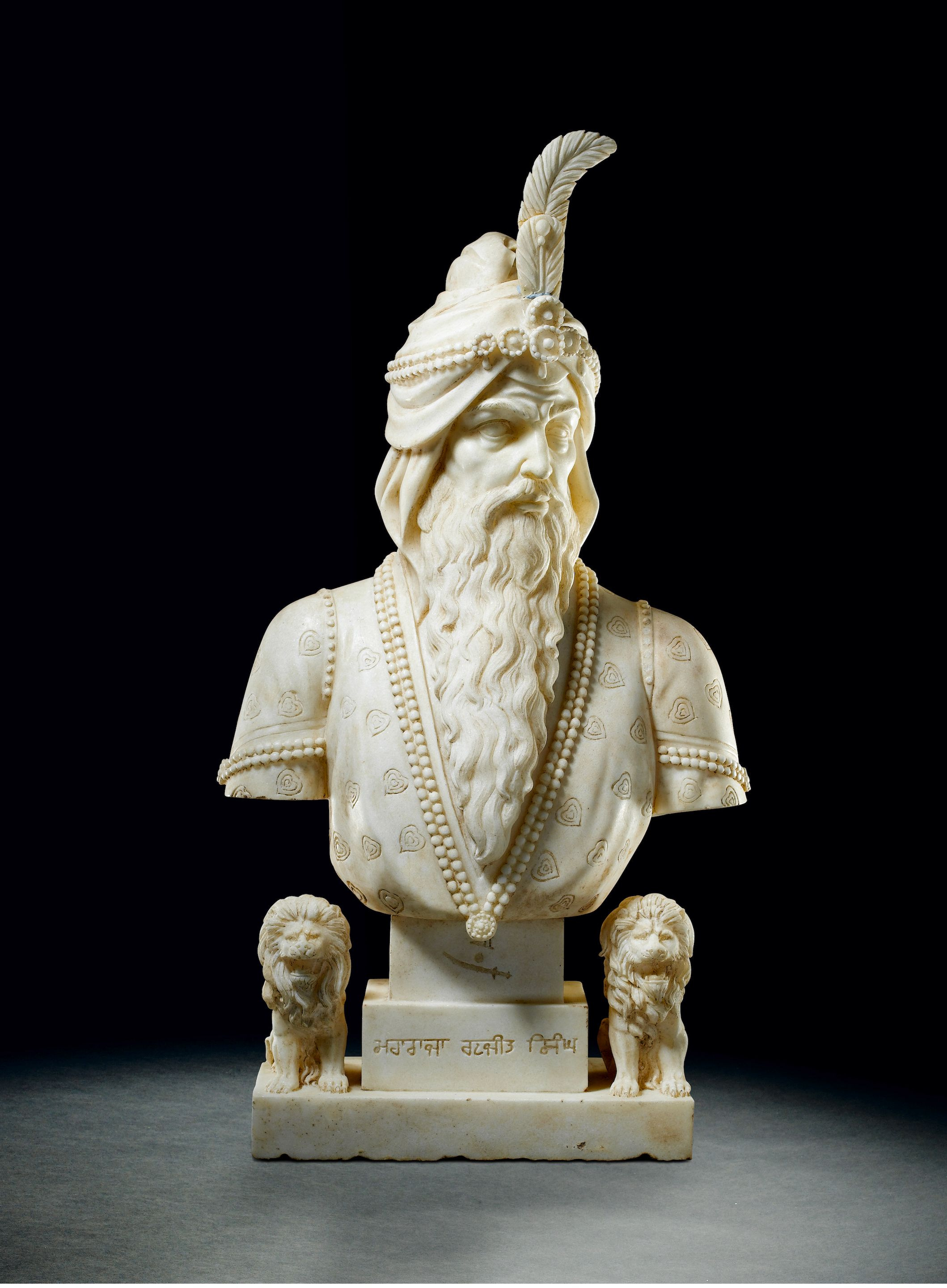
Over time, a caricature replaced a complex political culture.
This process was reinforced by Victorian moral assumptions. By the late nineteenth century, British officials had become far more anxious about public performance, sexuality and display, judging them against Victorian ideas of restraint and respectability.
As a result a result a ruler surrounded by musicians was no longer understood as participating in a recognised tradition of governance. Instead, he was seen as unfit to rule.
At the heart of this lies a cultural difference that was being utilised to try to show proof of administrative failure.
What makes this story more troubling is that it did not remain confined to colonial discourse. Indian reform movements in the late 19th and early 20th centuries began to absorb many of these assumptions. There were campaigns against nautch performances and hereditary musicians that drew directly on Victorian ideas about respectability.
By the time British rule took hold in Punjab, the story had already been written by them. Indigenous rulers were portrayed as decadent, their cultural practices used as evidence and their removal framed as morally justified.
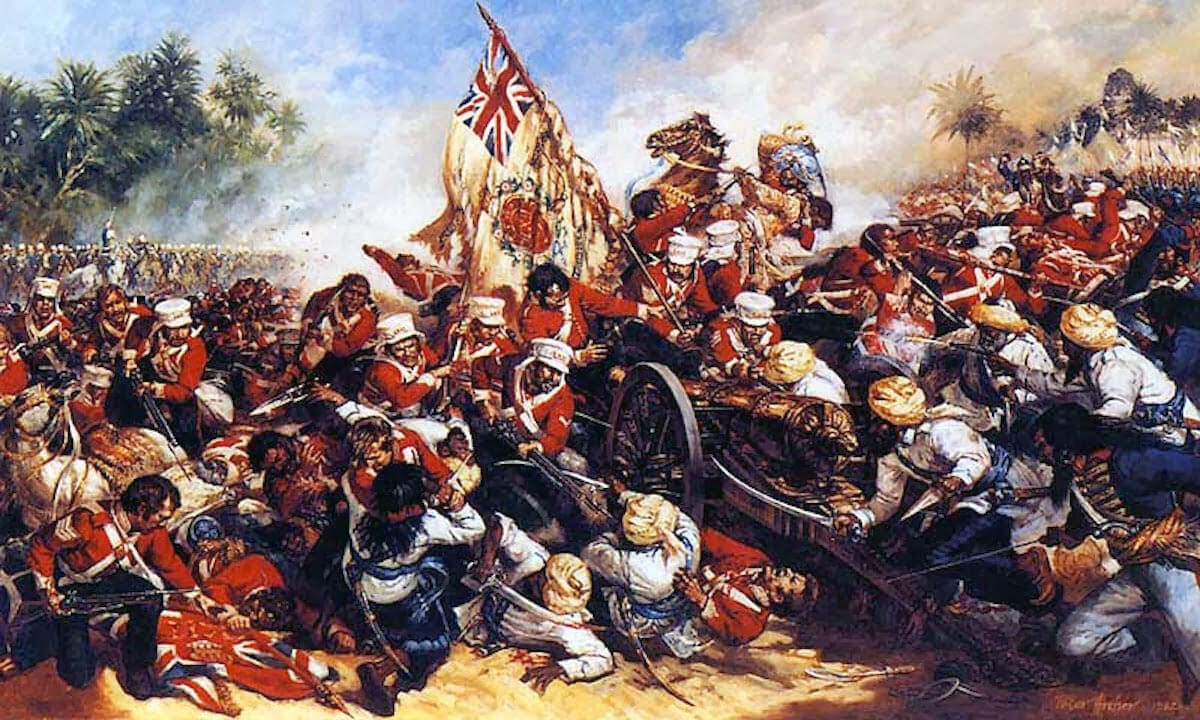
The EIC had imposed political control with the annexation of Punjab but it also rewrote the past in ways that made that not only made control appear necessary but morally justified.
The persistence of the “debauched monarch” stereotype matters because it continues to shape how history is understood.
I’d be the first to admit, it does offer a simple explanation for conquest. Native rulers failed, therefore intervention followed and annexation was justified. However, it removes all the nuance and obscures the structural realities of power.
The Sikh state did not collapse because of pleasure. It collapsed because of succession crises, external pressure and imperial ambition.
Flattening that history into a narrative of just indulgence makes domination appear natural, while also ignoring the wider political and structural causes of collapse.
It also raises wider questions:
How many other forms of political life have been dismissed because they did not resemble European models?
How often has culture been turned into evidence against those who practised it?
And at the same time, are there cultural practices that cannot simply be defended in the name of cultural difference?
Nonetheless, we’ve seen that Empire didn’t win through force alone. It also won by fixing the story that explains why their force and conquest was not just required but justified.
These ideas are explored in greater depth in my conversation with Radha Kapuria on the Ramblings of a Sikh podcast. Drawing on her book Music in Colonial Punjab, we discuss how performance, patronage and cultural life were reshaped under empire, and why colonial descriptions of “decadence” tell us more about power than about Punjabi society itself. The episode is available on all major podcast platforms or you can watch it below.
British propaganda wasn't exclusive to Sikhs themselves either, it even extended to European-origin generals. Here's an article covering the evolution of the vilification of Paolo di Avitabile: https://journals.openedition.org/lrf/1273
Many of the talking points used by modern Muslims against him, that he was unnecessarily cruel, are imported from these British writers and are rebutted as a side effect. Though the article's aim is moreso at British writers themselves who conceived these ideas. In fact, Avitabile's methods for dealing with Pashtoons were themselves imported during his stays in Islamic Persia and Central Asia. Basically, he used Muslims' own brutal tactics and measures against them to successfully pacify Peshawar.