
4 Sikh Biographies
A princess caught in the midst of WW2, a bus driver who changed British law, a fake Yogi who built a cult and a revolutionary who was executed at just 23.

Each one of the following podcast episodes follows the life and history of a very different person.
These aren’t hagiographies, they’re honest, complicated portraits of people who either were caught up in or made history in their own right.
Amrit Kaur: The Forgotten Princess of Kapurthala
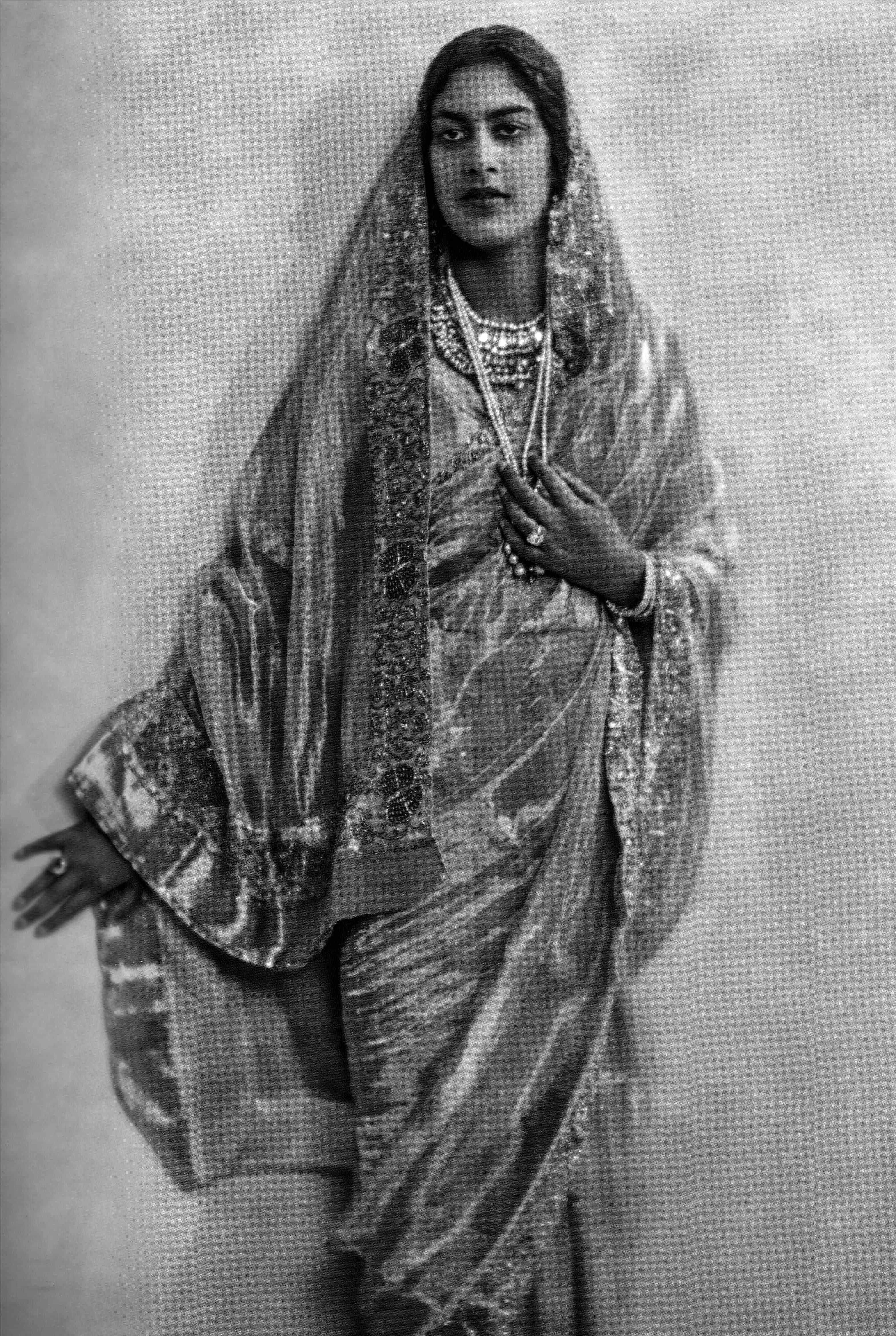
Guest: Livia Manera Sambuy | Watch on YouTube
Amrit Kaur was born in 1904 as the fifth child and only daughter of Maharaja Jagatjit Singh of Kapurthala. She grew up between Punjab and Europe, attended boarding school in Sussex where she played in the school jazz band, studied in Paris and married the Raja of Mandi. Then, sometime in the 1940s, she disappeared.
The conversation with Livia Manera Sambuy, the author of In Search of Amrit Kaur, traces a 12 year research journey to find out what actually happened.
Livia stumbled onto Amrit Kaur’s story through a Lafayette studio portrait and a trail of contradictory accounts: some claimed she died in a Nazi concentration camp after being caught rescuing French Jews, others stated that she was arrested by French collaborators and used her position to negotiate the release of other detainees.
However, what Livia found at the British Library were telegrams from a double agent, along side correspondence from Amrit Kaur’s husband and father desperately trying to secure her release. The British government decided she wasn’t worth a prisoner exchange as, quite simple, she wasn’t important enough.
This episodes offers a portrait of a woman who came from Sikh royalty, moved through the highest circles of European society, fought for women’s rights and against child marriage and polygamy back in India and was ultimately abandoned by the same empire her family had supported.
Livia’s research uncovered that Amrit Kaur’s own daughter spent nearly eighty years not knowing what happened to her mother, a silence that Livia was eventually able to break.
Tarsem Singh Sandhu: The Man Who Wore His Turban to Work
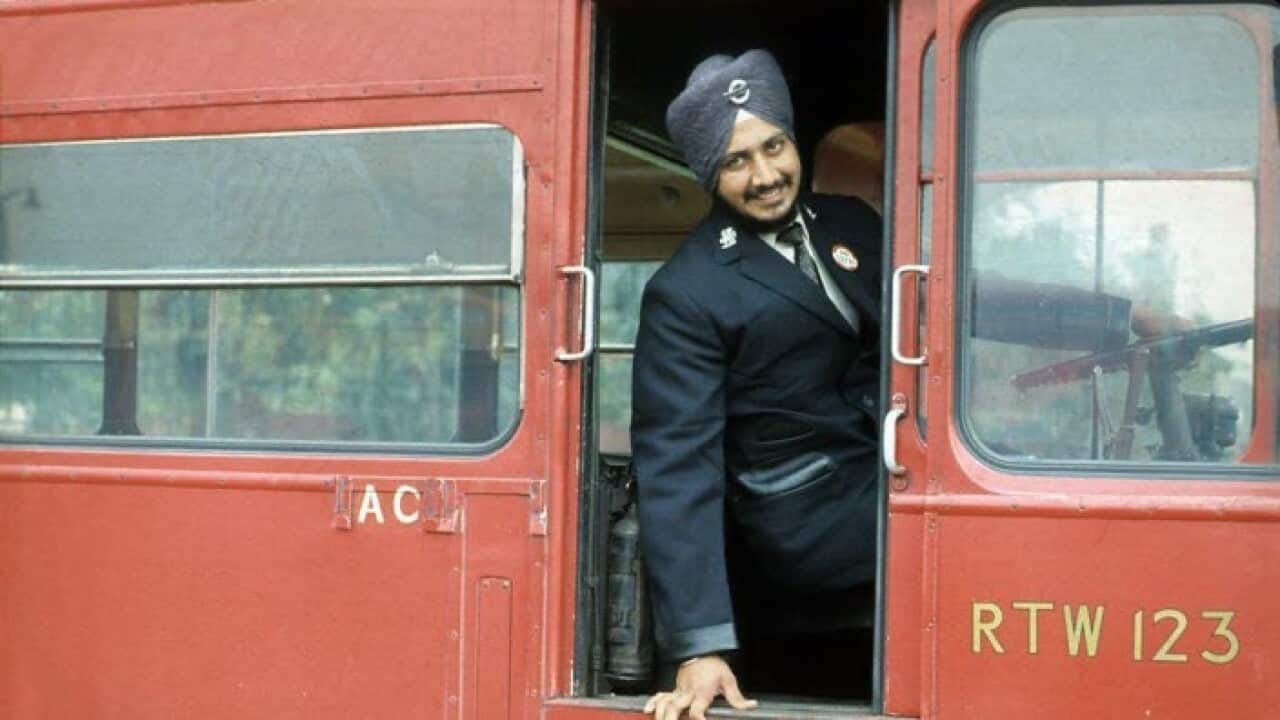
Guest: Tarsem Singh Sandhu | Watch on YouTube
Less than two decades after the Second World War, in which almost 200,000 turban-wearing Sikh soldiers were killed or wounded fighting for Britain, you could still be suspended from your job in London for wearing a turban. Tarsem Singh Sandhu was one of the men who refused to accept that.
Tarsem tells his story in his own words in this episode and it’s disarmingly straightforward. He came to England, got a job as a bus driver with London Transport and was told he couldn’t wear his dastaar on the job.
Rather than remove it, he fought back. His manager actually supported him but on his very first day driving with his turban, colleagues staged what the newspapers called the “Mad Hatter’s Protest” other drivers wearing ridiculous hats and costumes to mock what they saw as a special exemption, along that, passengers hurled abuse.
Tarsem’s response, as instructed by community elders, was simply to keep driving and not engage.
“If somebody shouts at you, don’t reply. Don’t come out of the bus.”
The episode goes deeper than one man’s historic defiance. It covers the wider turban controversy of 1960s Britain, the role of figures like Enoch Powell in stoking anti-immigrant sentiment and the story of Sohan Singh Jolly, who made a drastic public promise to self-immolate if the ban wasn’t lifted.
What makes this a fascinating piece of history is Tarsem himself, here is a man who describes facing daily humiliation with a matter-of-factness that makes the racism all the more stark. He wasn’t trying to make history, he was trying to go to work.
Yogi Bhajan: A Legacy Built on Lies
Guests: Philip Deslippe & Stacie Stukin | Watch on YouTube
This episode comes with a content warning, and it deserves it. The conversation with researcher Philip Deslippe and journalist Stacie Stukin, who co-authored a major investigative piece for Vice, dismantles the myth of Yogi Bhajan systematically and with extensive documentation.
The picture that emerges is damning.
Harbhajan Singh Puri arrived in North America and reinvented himself as “Yogi Bhajan,” building the 3HO (Healthy, Happy, Holy Organization) into a sprawling network that combined Kundalini yoga with a version of Sikhism that bore little resemblance to the tradition he claimed to represent.
Philip and Stacie describe an organization they call akin to a mafia operation: telemarketing scams, drug smuggling, fraudulent art sales, gemstone fraud. This ran alongside systematic sexual abuse, blackmail and the deliberate targeting of vulnerable young people, particularly at a boarding school in India where children were seperated from their parents.
This episode helps unpack the mechanics of the cult and although some what of a difficult listen it’s important listen, particularly for anyone who’s encountered “Kundalini yoga” without knowing its origins and for those who want to understand the evidence behind the allegations.
Bhagat Singh: The 20-Year-Old Atheist Who Challenged the Worlds Biggest Empire
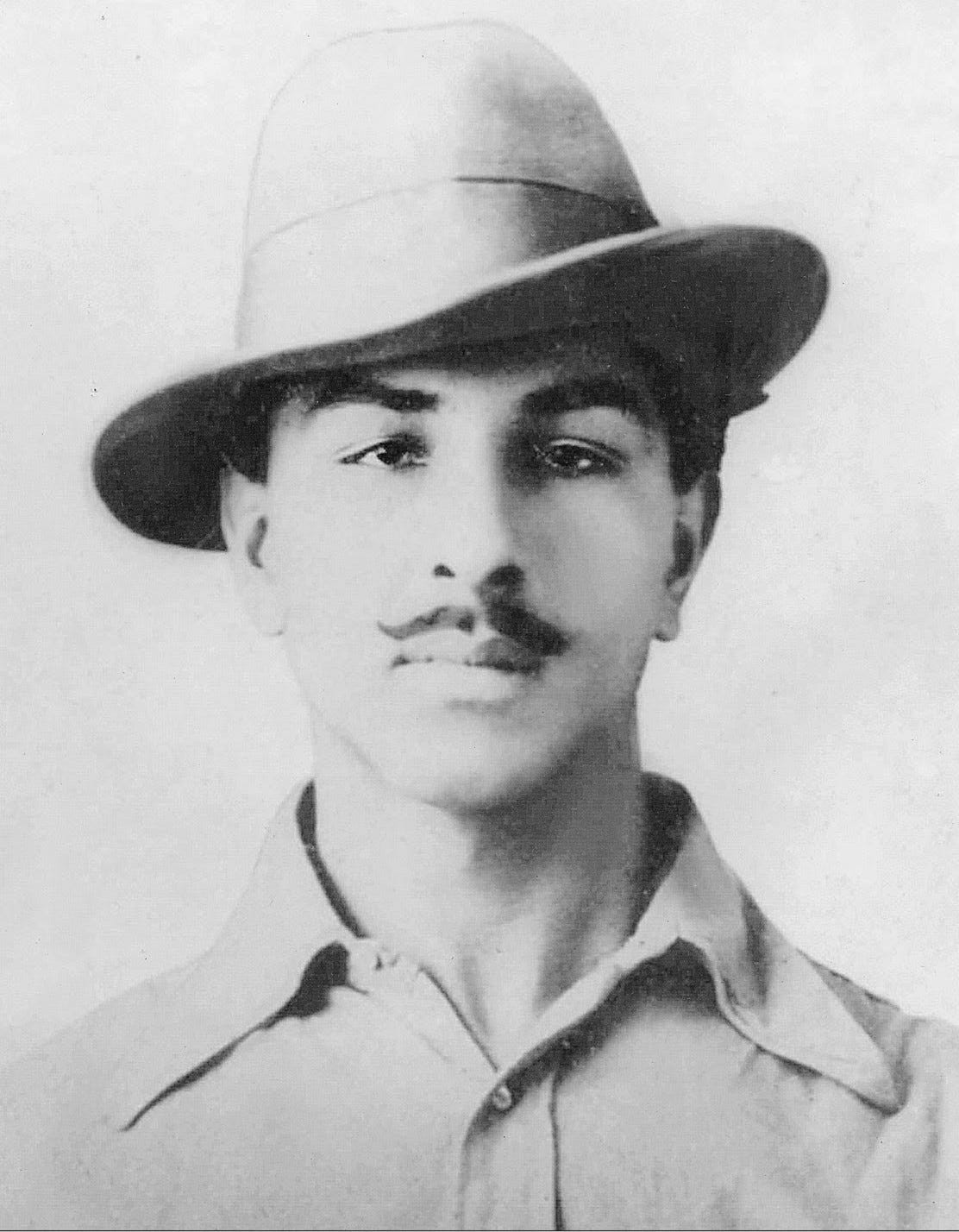
Guest: Assistant Professor J. Daniel Elam | Watch on YouTube
Bhagat Singh is immortalised in history and pop culture. Everyone has heard of, seen or knows some part of the story of the ideologically fiery, young martyr, who shook the British Empire.
This conversation looks at Bhagat Singh the thinker with J. Daniel Elam, assistant professor of comparative literature at the University of Hong Kong.
Elam found Bhagat Singh while looking for radical political thought outside the usual Western canon of straight white male thinkers. What he found was a twenty year old from Punjab reading anarchists and socialists from around the world, pulling together post-First World War internationalist ideas with clarity and writing succinct newspaper essays that engaged in global debates around revolution, atheism and anti-colonialism.
The conversation discusses martyrdom. The discussion touches upon the idea that Bhagat Singh's commitment to martyrdom is itself a re-articulation of the Sikh concept of shahidi but reimagined through his atheism.
For Bhagat Singh, martyrdom is an end unto itself. There's no transcendent reward waiting on the other side, the moment he dies, he dies, and that moment matters precisely because it's final. It's a striking departure from Abrahamic frameworks where martyrdom assumes a God who rewards the sacrifice. In the Sikh understanding that Bhagat Singh draws on, those questions don't even enter the picture, it’s is just the act that matters.
Bhagat Singh’s atheism is arguably less a denial of God and more a decision to stop looking upward for answers. Elam describes it as closer to what we'd now call secularism. Bhagat Singh wasn't making a firm claim that God doesn't exist, he was saying the question is irrelevant. Every guiding principle should come from what we can actually know: other people, this world, justice in the here and now.
Elam also confronts the uncomfortable reality of Bhagat Singh’s afterlife and the myth that has emerged as a result of how his youth and his unfinished thinking make him infinitely adaptable, claimed by all, mythologised into a figure who bears little resemblance to the actual young man who still had crushes on actresses and changed his mind in public.
The episode is a reminder that revolutionary and human aren’t opposites nor just a part of the past.
More Stories
If you want to support the work, become a paid Substack subscriber or a paid YouTube member here.